

There’s this scene in Love Actually that I really hate. Colin Firth plays a famous author working on a new book at his Italian villa overlooking a scenic lake. It always makes me cringe. Not the part where the wind blows his precious manuscript into the lake or the part where he dives into the freezing water to save it. What bugs me is the idea that somewhere in the world there are writers with lakeside villas. I usually have this thought while I’m trying to prop my phone on the steering wheel during a lunch break. There would surely be more legroom in an Italian villa.
I’m not a full-time writer. I spend the majority of my working hours teaching elementary special education outside of Philadelphia. I happen to like it very much, despite the obvious challenges of sneaking writing into the cracks of a rather busy professional life. I write before my family gets up in the morning. I write on my lunch breaks and while I’m waiting for meetings to start. I know I’m not the only one doing it this way, so I thought I’d share a few of the things that have helped me so far on my journey.
I SNEAK PRE-WRITING INTO RANDOM BREAKS
For me, the most time-consuming part of writing is the part where I scan back over what I wrote the day before. If I only have 25 minutes to write, this pre-writing process could easily take all of that time. Recently I’ve been trying to sneak pre-writing into shorter breaks when drafting isn’t practical. Maybe I have a 10-minute window early in the day - that’s a good time to re-read the previous days’ work or scan through my character notes. If I can knock those things out before my longer break, I’m able to devote more of that time to actually writing.
I GOT A KEYBOARD FOR MY PHONE
It sounds like an unnecessary luxury, but every time I prop up my phone to write something, I’m glad I’m not thumbing out a manuscript on that tiny little screen. With a bluetooth keyboard that connects to your phone, you can write in a park, in the car, while you’re waiting for your kid to finish swim lessons. A keyboard is more portable and a lot cheaper than a laptop, and if you’re like me and keep your writing on a cloud server like Google Docs, you can pick up wherever you left off once you’re back at the computer.
I KEEP A DAILY WORD COUNT
Sometimes my daily word count is pretty abysmal, but if I’m drafting something, I’ve learned that the numbers always add up. I’ll often get to the end of what I thought was a really terrible writing week and find that I actually wrote 2,000 words. For me in the middle grade world, four months of “terrible” writing weeks can add up to a whole book! To be sure, there are some weeks when my word count really is super low or nonexistent, but keeping track helps me to reflect on why it happened, rather than just beating myself up for not being committed.
And that brings me around to my last thought - above all else, I have to go easy on myself. Sometimes the day job is going to eclipse my writing goals. That has to be okay.
Oh, and I never keep the only copy of my manuscript stacked under a mug near a windy lake. Obviously.


Anna Karenina. Hamlet. Pride and Prejudice. These texts are part of a well-established cannon; not reading them (or liking them) feels akin to committing a literary misdemeanor. But I’ll admit it: Hamlet… doesn’t really do it for me. Ophelia doesn’t get enough time on stage and the plot thickens to tapioca-pudding levels in later acts. That’s why I love adaptations. When the original story feels inaccessible, a good modern adaptation brings the central themes and conflicts into twenty-first century life.

I’ve always been a voracious reader, but now that I’m about to have a debut novel published, I see books as an author’s creation rather than just a story I consume, and enjoy, and feel things about. I know more about the work and hardship that most likely happened for the book to be in my hands. For me to have even heard of it in the first place now feels like a small miracle because so many good books aren’t widely known, and thus aren’t read.

In the early 1970s my brother-in-law, Mark, published a pornographic novel. No one I knew had read it, except my sister. She said that Mark’s book contained graphic sex every few pages because an agent told him that sex sells. It didn’t for Mark. At a family gathering shortly after the publication, a small group of us surrounded the proud new author. My devoutly religious mother was curious about Mark’s creative process.

There’s a cat lady in my novella, Great Expectations. She conforms to many aspects of the stereotype: she’s a misanthrope who lives alone with several felines. But Amanda Carey is so much more than a cat-lady. She’s smart and more sensitive than she seems; she is aware of the ridiculousness of her cat-situation (and has been known to curse at her cats and even handle them un-gently); and, unfortunately, she’s still reeling from some acutely painful past experiences. She’s a survivor and a fighter. Part of her embrace of cats (and her estrangement from other humans) is a response to trauma.

Imagine this scenario: You’re walking down the street on a warm spring day, enjoying the shop windows full of artfully displayed wares. People smile and nod. Some wave. Some pause to admire you as you pass them by. One or two even whistle in appreciation.

If you want to be an aspiring writer, you need to learn about the advantages of extensive reading. Strong reading habits allow us to write exciting blog posts, interesting stories, and so on. Active readers know that the attributes such as syntax control, correct word choice, and creative writing strategies can be obtained through reading. While doing so, you will also incorporate the new skills into your writing ability.

For as long as I can remember, I have thought of myself as a collector. This became most true while working on Pages Penned in Pandemic: A Collective during the end of 2020 and into this new year. And while my best friend and co-editor, Justin Maher, couldn’t wait to begin assembling the work within this book, I must admit the task felt daunting.
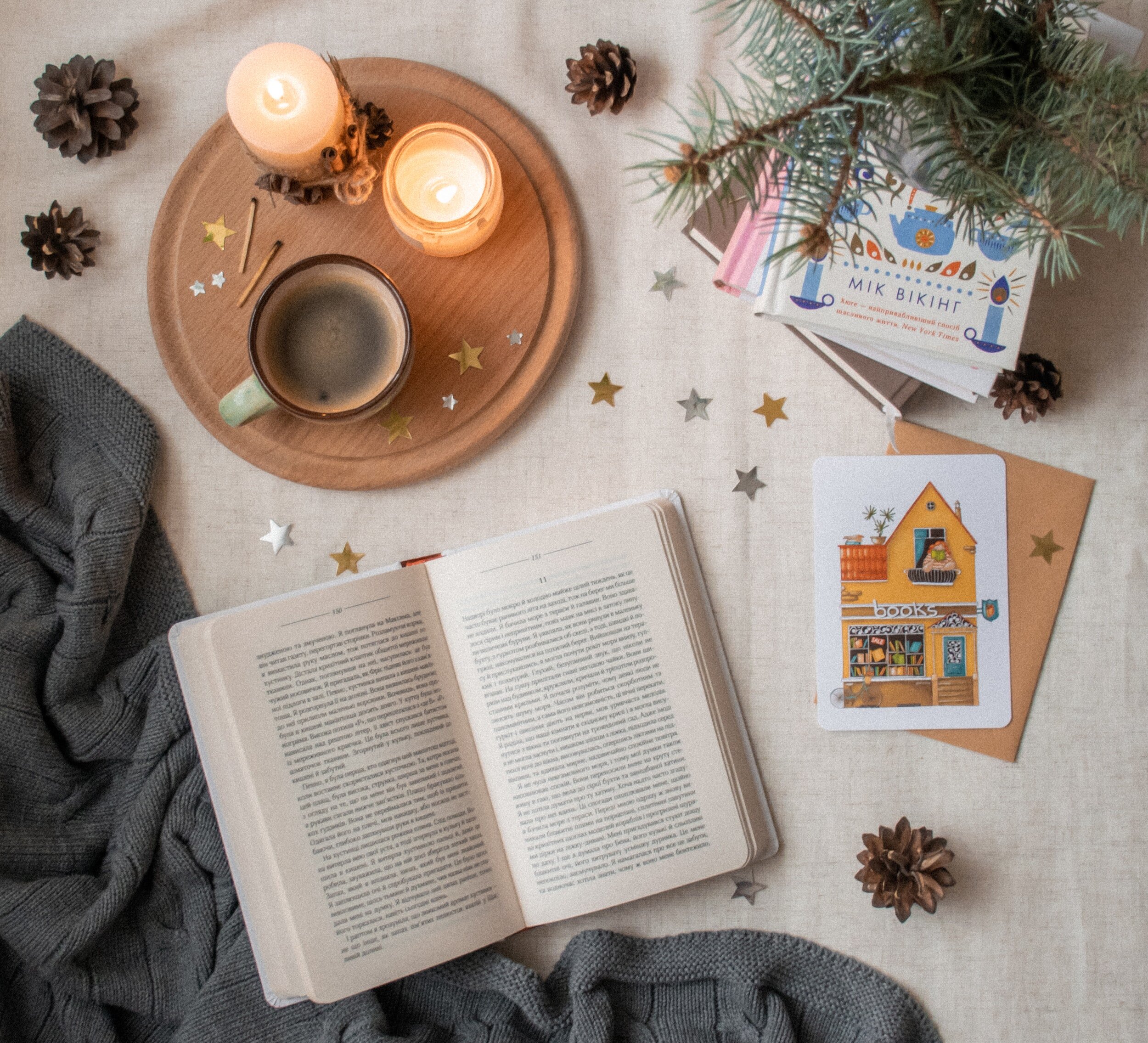
The rise of self-publishing and the prevalence of the ebook means that readers can access more books whenever, wherever. And with all this choice at their fingertips, a trustworthy review that helps readers navigate the ever-growing maze of books is more valuable than ever!

Manuela Azul has been crammed into an existence that feels too small for her. As an undocumented immigrant who's on the run from her father's Argentine crime-family, Manu is confined to a small apartment and a small life in Miami, Florida. Until Manu's protective bubble is shattered.

Every avid reader dreams about having their own personal reading nook. So, if you’re one of them, you’re at the right place since we’ll now discuss some of the amazing ways how to design it and incorporate it into the rest of your home design. Feel free to take a look at our ideas and add your personal touch to them as well.

While you can always count on your laptop or any regular old notebook to get your ideas down when you really need to write, there's tons of gadgets out there to make your writing even easier!

Recently, my husband and I watched The Truman Show on Netflix. I had first watched this movie in middle school as a part of my language arts class. It had a huge impact on me and when I found out Daniel had never seen it before, I was excited to show it to him. The movie lived up to my memory and, in talking to Daniel about it, it also gave me a writing epiphany!
Pacing in fiction has always been one of my great struggles because I get excited about a scene idea and rush to get there. It’s finally sinking in though that I need to slow down in order to get the interiority I want for my narrator and protagonist. But how do you slow down the pace of a scene? The trick is knowing when to show versus tell.

Last week we got the chance to talk about some of the faux-pas writers have encountered with their friends in the past. It probably left you with some questions about what exactly could you do if you didn't want to offend your friends? Here's some ideas!

NaNoWriMo starts in exactly two days and every writer on twitter is either jumping with excitement or trying not to cry with despair. It's the most exhilarating and terrifying month of the year. If you're not in the know, NaNoWriMo stands for National Novel Writing Month, and is hosted by the Non-Profit Group NaNoWriMo. It's a challenge to write 50,000 words in one month, which is roughly 1667 words per day. So let's get down to it, what exactly are you going to write?

As I'm getting ready to start this grand experiment into running my author's website and blog, after managing other business' pages for over three years, I'm reminded of an open mic night or any reading, actually. I'm standing at the podium (or in my undergraduate days, standing in the middle of the smoker's patio with a security light shining behind me on a semi-frigid night right before mid-terms) and all eyes are on me. I've been practicing my reading for a week straight, nipped and tucked to fit a scene into a five-minute time slot, and have decided this is as good as it's going to get.
From the outside, the process of organizing a collection of work should seem the same no matter the project. While it’s true that the steps remain similar, each time a book comes to life, the experience is different.